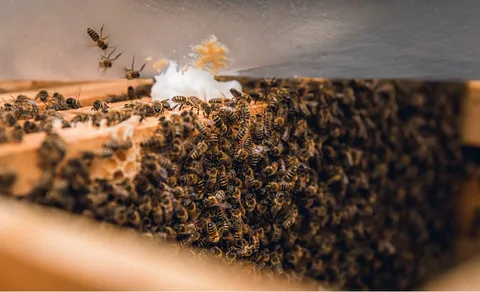
Bees are flying insects known for their role in pollination and honey production. They are a crucial part of ecosystems, playing a vital role in the reproduction of many flowering plants by transferring pollen between flowers. Here are some key points about bees:
- Classification: Bees belong to the order Hymenoptera, which also includes ants and wasps. There are over 20,000 known species of bees, grouped into around 4,000 genera.
- Social Structure: Bees can be solitary or social. Honeybees and bumblebees are examples of social bees that live in colonies with a well-defined hierarchy, including a queen, worker bees, and drones.
- Life Cycle: The life cycle of a bee typically includes egg, larva, pupa, and adult stages. The development time varies among species, with some bees completing their life cycle in just a few weeks.
- Communication: Bees communicate with each other through a complex system of dances and pheromones. Foraging bees may perform a “waggle dance” to indicate the location of a food source to other members of the colony.
- Pollination: Bees play a crucial role in pollination, transferring pollen from the male parts (anthers) to the female parts (stigma) of flowers. This process is essential for the reproduction of many flowering plants, including crops that humans rely on for food.
- Honey Production: Honeybees are well-known for their ability to produce honey. They collect nectar from flowers, mix it with enzymes, and store it in honeycombs. The bees then fan the nectar to reduce its water content, resulting in honey.
- Colony Collapse Disorder (CCD): Bees face various threats, including pesticides, habitat loss, diseases, and the phenomenon known as Colony Collapse Disorder (CCD). CCD is a mysterious phenomenon where entire colonies of bees abruptly disappear, which has raised concerns about the health of bee populations.
- Importance to Agriculture: Many crops depend on bee pollination for successful reproduction, and the decline in bee populations could have significant implications for agriculture. Bees contribute to the production of fruits, vegetables, nuts, and other crops.
- Conservation: Efforts are being made to conserve bee populations and promote their well-being. This includes reducing the use of harmful pesticides, creating bee-friendly habitats, and raising awareness about the importance of bees in ecosystems.
Bees are fascinating creatures that play a critical role in maintaining biodiversity and supporting food production. Their decline in recent years has sparked global concern, leading to increased efforts to understand and address the factors affecting bee populations.


